Start Positioning Your Career for 2027 Now

This summer, while you lie in that lounge chair or on the beach, possibly with sand in your toes as you gaze into the distance, will you imagine your future, your career in 2027?
Think about where you are now. What do you want for your future? What do you have to offer to an opportunity or a position? Can you clearly express it?
You already know the world and the world of work are in a state of flux, constant change. Don’t be caught flat-footed. Create your Plan B, plot strategies to elevate your position, or explore new destinations now. Reviewing and managing a career takes time and thoughtfulness.
Besides, you have many personal and professional factors to consider before deciding on a strategy. You may need to do some personal introspection and external research first.
Career strategies do not appear by coincidence. They require research, review, and consideration.
Using words from the movie “Jaws”- you are going to need a bigger boat – a broader perspective if you intend to make a career change or want to be viewed as a viable candidate for an opportunity.
To get that perspective, you may have to interject a structural methodology and guideposts.
Most professionals are excellent at their work. They are adaptable and handle change well. By most visible measures, they’re succeeding.
Yet, when I ask them whether they have a deliberate strategy for managing their career and not just respond to what comes next, actively shaping where they’re going, the answer is almost always some version of no.
Not because they’re careless about their futures. But because nobody ever told them they needed one.
Did Your Career Happen to You, or Did You Deliberately Manage It?
There’s a significant difference between a career that happens to you and one that you manage intentionally. This distinction becomes especially clear during times of transition.
The reactive professional updates their resume only when they need a job, considers their value during an interview, or reflects on their direction only when circumstances force them to do so. Their careers tend to move forward, but mostly in response to external events rather than being driven by a clear internal purpose.
Conversely, the intentional professional takes a different approach. They regularly step back from the daily grind to assess where they are now and where they want to be. They know their strengths, their positioning, and their market value well enough to make informed decisions. Instead of waiting for a crisis to spark clarity, they make maintaining that clarity an ongoing habit.
Over time, the outcomes for intentional professionals can look quite different; not because they’re more talented, but because they’re better prepared. They are consciously ready for opportunities, transitions, and those inevitable moments when everything changes. When that happens, having a clear sense of direction becomes invaluable.
What Does a Career Strategy Review Actually Involve?
A career strategy review isn’t a one-time event. It’s a periodic practice, an honest, structured assessment of where you are professionally, if anything, needs to shift.
It typically covers several interconnected areas:
Your Professional Identity: Who Are You Now?
Who are you now, not who you were when you took your current role, or who you were five years ago. Ask yourself: how have my strengths, values, and has my approach evolved? What new skills or perspectives have I gained? These prompts make the reexamination concrete and actionable.
Your Current Positioning: How Are You Known in Your Field?
How are you known in your organization, your industry, and your professional network? Does that reputation accurately reflect your current expertise and value — or is it based on work you’ve moved beyond? Positioning that made sense at one stage of your career can become a constraint at another.
Your Alignment: Are You Working With Your Strengths or Against Them?
Where do your current responsibilities genuinely connect with your strengths and values? Where do you feel the friction; do you have a sense that you’re working against yourself rather than with yourself? Misalignment that goes unexamined has a way of compounding quietly over time.
Your Trajectory: Do You Know Where You’re Actually Headed?
Do you know where you are headed and where you actually want to go? Recognizing signs like stagnation, misalignment, or feeling unfulfilled often indicate it’s time for a career review. Addressing these signals proactively prevents drift toward less meaningful opportunities.
Your Assets and Gaps: What You Bring and What You Still Need to Build
What skills, experiences, relationships, and credentials do you currently have? What would you need to develop or acquire to move toward your next chapter with confidence? Understanding both sides of this equation, what you bring and what you’re building toward.
Understanding both what you bring to the table and what you want to build toward makes your path more concrete, rather than abstract. This clarity can help you feel more prepared and confident about the next steps in your career, and it is most evident at moments of transition.
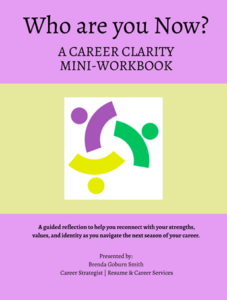
Before you dive into anything deep, I have created a free downloadable mini-workbook to help you review who you are now. It is a helpful starting point for shaping ideas of your value and future career.
I am happy to invite you to a private, no-obligation phone conversation, just the two of us, to discuss your situation and what you might want to manifest in 2027.

Related Posts

Resume Writer, Career Coach, or Life Coach? How to Know What You Actually Need

Your Career May Need a Mirror: Why Career Reviews Matter

Stop. Back Away from the Keyboard. Before You Update Your Resume, Know Who You Are.