How to Maintain Your Sanity in the Current Job Market
Please don’t assume your career path will continue as you have laid it out. Workplace changes can be unsettling to your sense of normalcy. You probably know that artificial intelligence, economic caution, and changing employer attitudes impact adaptability. Both of which affect new graduates and experienced workers, not just how they survive but also how they thrive.
The job market of 2025 is marked by slowing growth and the highest level of long-term unemployment since 2017 (excluding the pandemic years), according to Labor Department data referenced by The Wall Street Journal.
Your best strategy for remaining clear-headed when focused on your career plans is to plan for and anticipate change. That does not mean you focus on possible negative situations, but you identify resources and sketch out potential actions, so you are not caught flat-footed.
Here’s how to take control of your career in today’s challenging environment:
Emphasize and Showcase Your Skills, Not Just Your Experience
Employers are moving away from traditional degree signals and rigid job titles, focusing instead on practical, in-demand skills. This trend benefits job seekers willing to spotlight their transferable abilities:
- Identify and document your most relevant skills—think digital literacy, problem-solving, project management, collaboration, and AI literacy.
- Rework your resume and online presence to highlight quantifiable achievements and clear evidence of these skills.
Offer Examples of your Expertise
Instead of generic summaries, point to projects where you delivered results using critical competencies. For instance, if you’re a project manager, highlight a project where you improved efficiency by 20% through your problem-solving skills. Using numbers, dollar amounts, outcomes, and even testimonials will help the hiring manager imagine how you could contribute. Make regularly capturing your accomplishments a habit.
Commit to Upskilling Regularly
As technology, especially AI, rapidly alters job roles, adopting a perspective that includes lifelong learning as a necessity. Employing the strategy that involves updating your skills will boost your employability but also demonstrate your commitment to growth, which is a trait most employers increasingly value:
- Use AI-powered career platforms to identify skills gaps between your current qualifications and your target roles. Many services recommend relevant online courses or certifications.
- Enroll in short courses, boot camps, or self-paced modules, such as MOOCs (Massive Open Online Courses), LinkedIn Learning, or pursue industry-recognized credentials for a great option.
- Focus particularly on sectors poised for growth or resilience, such as logistics, healthcare, technology, and green energy.
- If you’re between jobs, organize your job search pursuit as if it were your job. Set up a personal routine that includes setting weekly goals. Keep records of your progress to maintain motivation and stay on track.
Broaden Your Job Search to Alternative Paths
In a competitive market, adaptability and flexibility can make the difference between frustration and a fresh opportunity:
- Be flexible enough to investigate contract, temporary, freelance, or project-based work. These options often provide active income, prevent resume gaps, and expand your network and experience.
- Be willing to pivot industries or consider adjacent career paths where your skills can translate—even if it means stepping outside your comfort zone.
- For entry-level applicants, apprenticeships, internships, and vocational programs are often more accessible, providing both learning and earning opportunities in a single setting.
Make Networking a Priority, Not an Afterthought
Hidden job opportunities abound, but they’re rarely found on public job boards. Networking is frequently the most effective route to job offers:
- Prioritize informational interviews, professional groups, alum networks, and employer meetups, both online and in-person.
- Leverage social media, especially LinkedIn: Engage thoughtfully with industry news, share your work and learning journey, and connect with insiders who can provide referrals.
- If you’re currently employed, look for internal networking and mobility opportunities, such as cross-functional projects and open communication about your goals, that can signal your readiness for new roles.
Embrace the Changing Nature of Entry-Level and Mid-Career Roles
AI is transforming the world of work, especially at the entry and midcareer levels:
- New graduates should focus on developing uniquely human skills—such as creativity, communication, and strategic thinking—and become comfortable with AI and digital tools, as routine tasks are increasingly automated.
- For mid-career professionals, lateral moves (moving to a different role at the same level), short-term assignments, and ongoing training can prevent stagnation and signal commitment to growth. Frame volunteer projects, freelance gigs, or passion projects as valid (and valuable) experience on your resume.
Anticipate Disruptions
No one wants to be displaced, but job eliminations occur for various reasons. If it does, job searching can be exhausting. Tackle the challenge with an organized plan:
- Set and maintain a daily or weekly routine for job searching, networking, and personal development. Deliberate scheduling will not only keep you organized but also give you a sense of control over your job search. Find or create accountability—join a job search group, partner up with a friend, or tap into support offered by career services. Hint – book an appointment: Talk with a Certified Career Transition Coach and Professional Resume Writer.
Balance Your Search
Your mental perspective is as important as your technical skills. Allow time for hobbies, exercise, or volunteering. These meaningful activities help maintain optimism. Suppose you can relate those activities to the related work skills, all the better. Many innovative ideas can surface when you are relaxed. They can even enrich your profile for potential employers. For example, consider setting aside an hour each day for a hobby or exercise, or volunteering on weekends.
Use Every Available Resource During Your Job Search
Modern job seekers have access to a wealth of powerful resources. Make full and creative use of them:
- AI-powered resume writing and job matching tools can help you tailor applications efficiently and break through automated screening systems. Use AI judiciously.
- Tap into career offices and specialized job boards tailored to your field or demographic.
- Informational interviews remain one of the most effective ways to access “hidden” job markets, gain insider knowledge, and secure strong referrals.
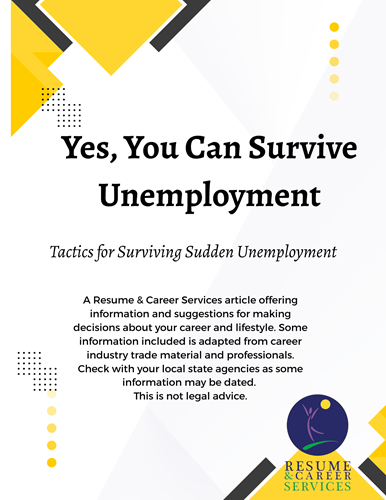
Tactics for Surviving Sudden Unemployment
Businesses, industries, and the economy may experience unexpected shifts. Through no fault of your own, you could find yourself suddenly out of a job. Such a situation can be disturbing. The best strategy is to construct a survival plan. To create a survival plan and plot your next steps, download my free guide, “Yes, You Can Survive Unemployment.”
Imagine a Positive Outcome and Stay Optimistic
Be observant of your surroundings. What’s changing? Indeed, a great deal of new technology is being introduced. Think about how work tasks are changing and how you can contribute or learn about those technologies. There will always be work to be done. Research and identify a growth industry that interests you.
“If only careers came with a step-by-step manual that required you only to connect the dots prescribed for you. There may be hiccups, detours, and bumps on your road of life and career. As the world and society change, be ready for pivots, setbacks, and opportunities; along the way, you will learn lessons. Those lessons make you valuable and add to your wisdom and expertise.” – Brenda Goburn Smith
Develop Your Personal Perspective
You were not born where you are today; your career has progressed, so you know what success looks like. Reflect on how you used your resilience to face challenges in the past. You know that people hire people, so make yourself a viable candidate who looks like you belong in your destination. Give your network of connections some attention and update the skills related to your pursuit. Remember that today’s proactive steps lay the groundwork for future success. Don’t strategize in a vacuum. Bounce your concerns and ideas off a Career Coach who has resources and services – book an appointment today.

Related Posts

Play the Percentages for the Best Job Search Strategy

Strategies for Job Searching Online and Networking
DIY Resumes and Cover Letters